Senegalese Culture for Travelers: Everything You Need to Know Before Traveling
Senegal is much more than golden beaches and photographic safaris. It is a country where culture beats with an intensity that is hard to find anywhere else in the world. For the curious traveler, immersing oneself in Senegalese culture means discovering a rich, hospitable, and deeply rooted social fabric that coexists harmoniously with modernity. In this guide, we tell you everything you need to know to experience Senegal beyond the postcards.
Teranga: Hospitality as a Philosophy of Life
Before talking about music, wrestling, or festivals, there is a concept that defines Senegalese culture better than any other: teranga. This Wolof word has no exact translation into Spanish, but it approximates to 'generous hospitality', the sincere welcome that Senegalese people offer to anyone who arrives in their land.
Teranga is manifested in everyday gestures: in the neighbor who invites you to share their plate of thiéboudienne, in the taxi driver who explains the history of the neighborhood without you asking, in the family that opens the doors of their home during a local party. As a traveler, the most important thing you can do is respond to that spirit with respect, openness, and a smile.
Basic Etiquette Rules for Travelers
Always greet before asking. In Senegal, starting a conversation directly with a question is considered rude. Dedicate a few seconds to the ritual greeting, which may include asking about the family and health.
Accept the tea. The ataya, the mint tea served in three rounds, is a friendship ritual. Refusing it can be interpreted as an offense.
Dress modestly, especially in rural areas and in religious environments. Although Dakar is a cosmopolitan city, respect for local customs always adds up.
Use your right hand to eat, greet, and hand over objects. The left hand is considered impure in local tradition.
Senegalese Music: Mbalax, the Conquering Rhythm
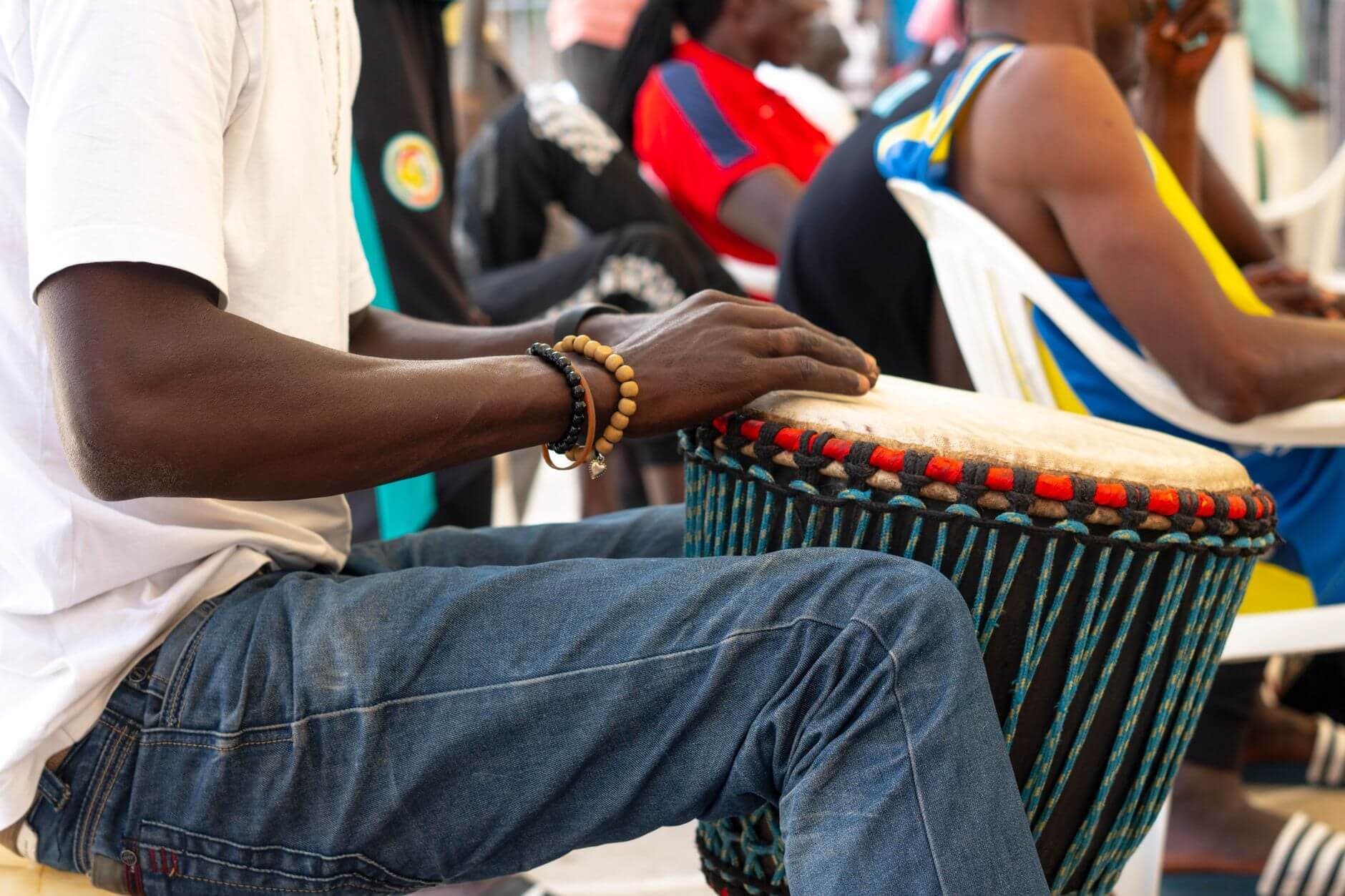
If there is a sound that defines Senegal, it is mbalax. Born in the Dakar region during the 1970s, mbalax is a unique fusion of traditional Wolof percussion — especially the sabar drum — with influences from jazz, Latin, and Afrobeat. The result is a syncopated, vibrant, and absolutely addictive rhythm.
The great ambassador of mbalax in the world is, without a doubt, Youssou N'Dour, whose voice and music have taken Senegalese music to the most important stages on the planet. But the local scene goes far beyond: artists like Baaba Maal, Ismaël Lô, or Viviane Chidid are part of an extraordinarily vibrant musical ecosystem.
Where to Listen to Live Music in Senegal?
For the traveler who wants to experience mbalax in its purest form, Dakar is the epicenter. The thiossanes, live music venues scattered throughout neighborhoods like Medina or Fann, offer nights of percussion and dance that stretch until dawn. It is also common to find spontaneous performances during weddings, baptisms, and community celebrations, events to which locals often invite tourists with enormous generosity.
From NeoGeo DMC, we can include visits to cultural spaces and traditional music nights in your itinerary, allowing you to connect with the local scene in an authentic and safe way.
Senegalese Wrestling: Sport, Ritual, and Spectacle
Few shows are as fascinating for a traveler as attending a Senegalese wrestling match. Known in Wolof as laamb, this discipline is the country's most popular sport, with a following that surpasses even football in many regions.
Laamb combines physical strength with spiritual rituals that give it a nearly mystical dimension. Before each match, the wrestlers — called lutteurs — perform protection ceremonies led by their marabouts (spiritual guides), cover their bodies with amulets, and perform intimidation dances to the rhythm of the sabar drums. The atmosphere in the stadium is electrifying: thousands of fans sing, dance, and cheer in a show that goes far beyond sports.
How Can a Tourist Attend a Match?
Major Senegalese wrestling matches are held mainly at the Stade Demba Diop and the Arène nationale in Dakar, although there are also local matches in cities like Saint-Louis, Thiès, or Ziguinchor. The high season for matches usually coincides with the dry season, between November and May.
Attending as a tourist is perfectly possible and highly recommended. Our local guides at NeoGeo DMC can guide you on the best matches of the season and accompany you so you don't miss any detail of the ritual or the show.
Festivals in Senegal: The Cultural Traveler's Calendar
Senegal is a country of celebrations. Throughout the year, Senegalese festivals offer the traveler a privileged window into the country's traditions, art, and collective identity.
World Festival of Black Arts (FESMAN)
Although its periodicity is irregular, FESMAN is one of the most important cultural events in the African continent. It brings together in Dakar artists, musicians, writers, and thinkers from all over the African diaspora and celebrates the richness of black cultures around the world. If it coincides with your trip, it is an unmissable experience.
Saint-Louis Jazz Festival
Every year, the historic city of Saint-Louis — declared a UNESCO World Heritage Site — transforms into the capital of African jazz. The festival attracts international and local artists, and the colonial atmosphere of N'Dar Island, with its narrow streets and iron balconies, makes it a storybook setting.
Magal of Touba
For travelers interested in Senegal's spiritual dimension, the Magal of Touba is a unique experience. This annual pilgrimage to the holy city of Touba brings together millions of devotees of the Mouride brotherhood and is one of the largest religious gatherings in the Islamic world. Attending as a respectful observer allows you to understand the depth of faith that underpins Senegalese society.
Local Festivals and Community Celebrations
Beyond the major events, Senegal is full of local celebrations: harvest festivals in Casamance, initiation ceremonies in Diola communities, fishing festivals in coastal villages. These lesser-known but equally valuable events often provide the most authentic experiences. A good tour operator like NeoGeo DMC can help you plan your trip to coincide with one of these celebrations.
Gastronomy, Art, and Crafts: Culture in Everyday Life
Senegalese culture is also lived at the table and in markets. Thiéboudienne — rice with fish and vegetables — is the national dish par excellence, but Senegalese cuisine offers much more: chicken yassa marinated in lemon and onion, peanut mafé, or fish caldou are just a few examples of a generous and nuanced gastronomy.
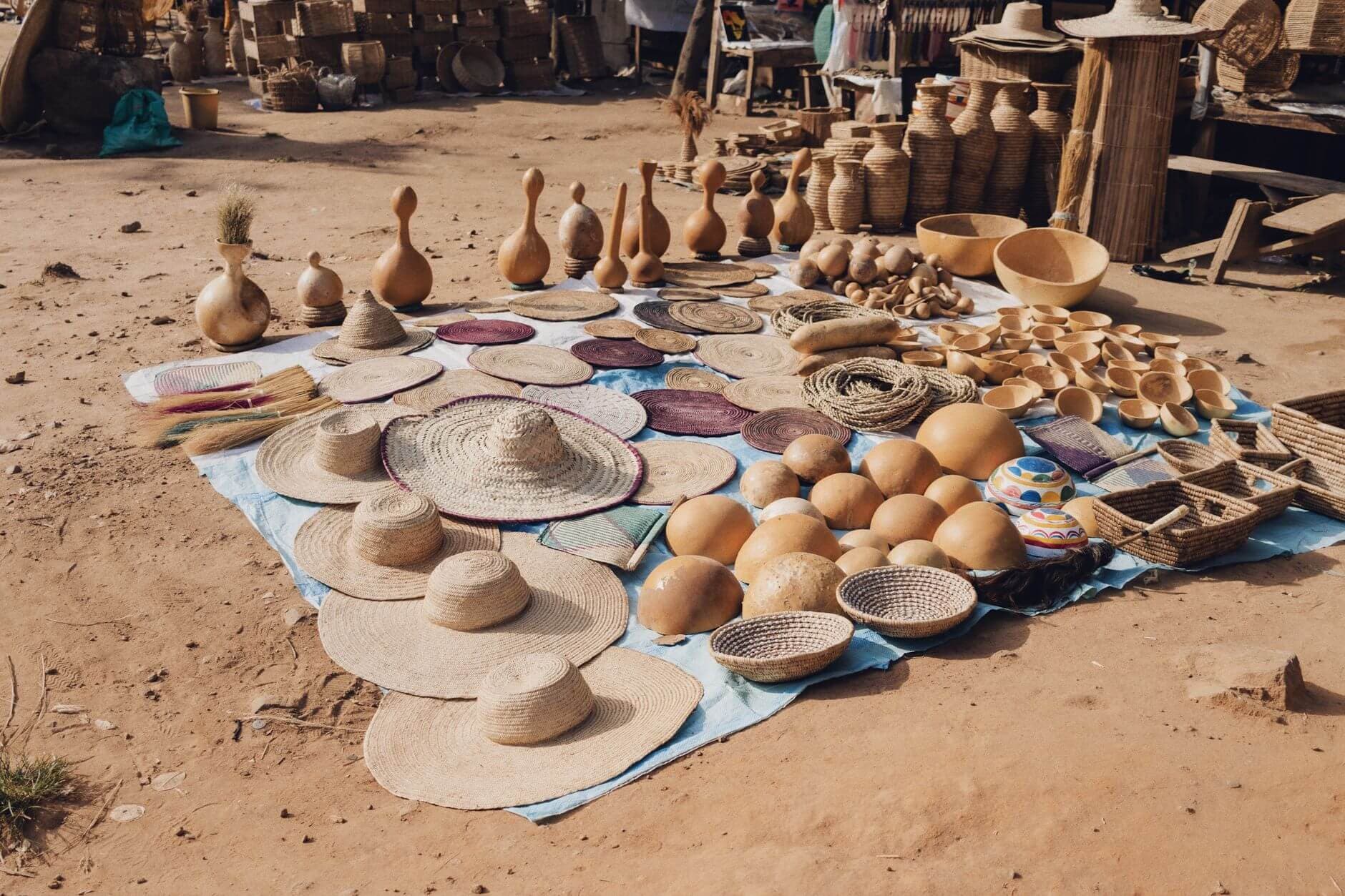
In artisanal markets — like the Marché Kermel or the Marché Sandaga in Dakar — the traveler discovers another dimension of local culture: vibrant wax and bazin fabrics, wooden masks and sculptures, hand-woven raffia baskets, silver and bronze jewelry. Negotiating the price is part of the experience, and doing it with humor and respect always ends in a memorable conversation.
Practical Tips for Respecting Senegalese Culture
Learn a few words in Wolof. A simple 'Nanga def?' (how are you?) opens more doors than any tourist guide.
Ask permission before taking pictures. Especially in religious ceremonies and rural areas, always ask before taking out your camera.
Respect prayer times. 95% of the Senegalese population is Muslim. During the five daily prayers, many businesses and activities briefly stop.
Buy from local commerce. Purchasing handicrafts directly from artisans or in local markets directly contributes to the economy of the communities.
Be patient. Time in Senegal works differently. The 'African hour' is not laziness, it's another way of understanding life's priorities.
Travel with NeoGeo DMC
To experience this culture first-hand, discover our Essence of Senegal: Bedik, Bassari and waterfalls circuit (9 days) or Full Casamance: an immersion in the Diola communities (12 days). Ask our team for a tailor-made quote.
Frequently Asked Questions About Senegalese Culture for Travelers
Is Senegal a Safe Destination for Cultural Tourists?
Yes. Senegal is considered one of the most stable and safe countries in West Africa. The tradition of teranga makes tourists generally well-received. As with any destination, it is recommended to take basic precautions and travel with a trusted operator.
What is the Best Time to Visit Senegal and Experience its Culture?
The dry season, between November and May, is the most recommended. It coincides with most festivals and wrestling matches, and the weather is more pleasant for moving around the country.
Do I Need to Know French or Wolof to Travel to Senegal?
French is the official language and will allow you to communicate in most tourist contexts. However, learning a few phrases in Wolof — the most spoken language in everyday life — will make a huge difference in the quality of your interactions with the local population.
Can I Attend Religious Ceremonies as a Tourist?
In many cases, yes, as long as you do so with respect and discretion. Events like the Magal of Touba are open to respectful visitors. For more intimate ceremonies, it is recommended to have the mediation of a local guide who can facilitate access in an appropriate manner.
What Cultural Tour Does NeoGeo DMC Recommend to Discover Senegal in Depth?
At NeoGeo DMC, we design customized cultural itineraries that combine visits to Dakar, Saint-Louis, Casamance, and the interior of the country, with live music experiences, attendance at wrestling matches, and participation in local festivals. Contact us and let's create the cultural trip you've always dreamed of together.