Why the Pink Lake is pink: the science behind its unique color
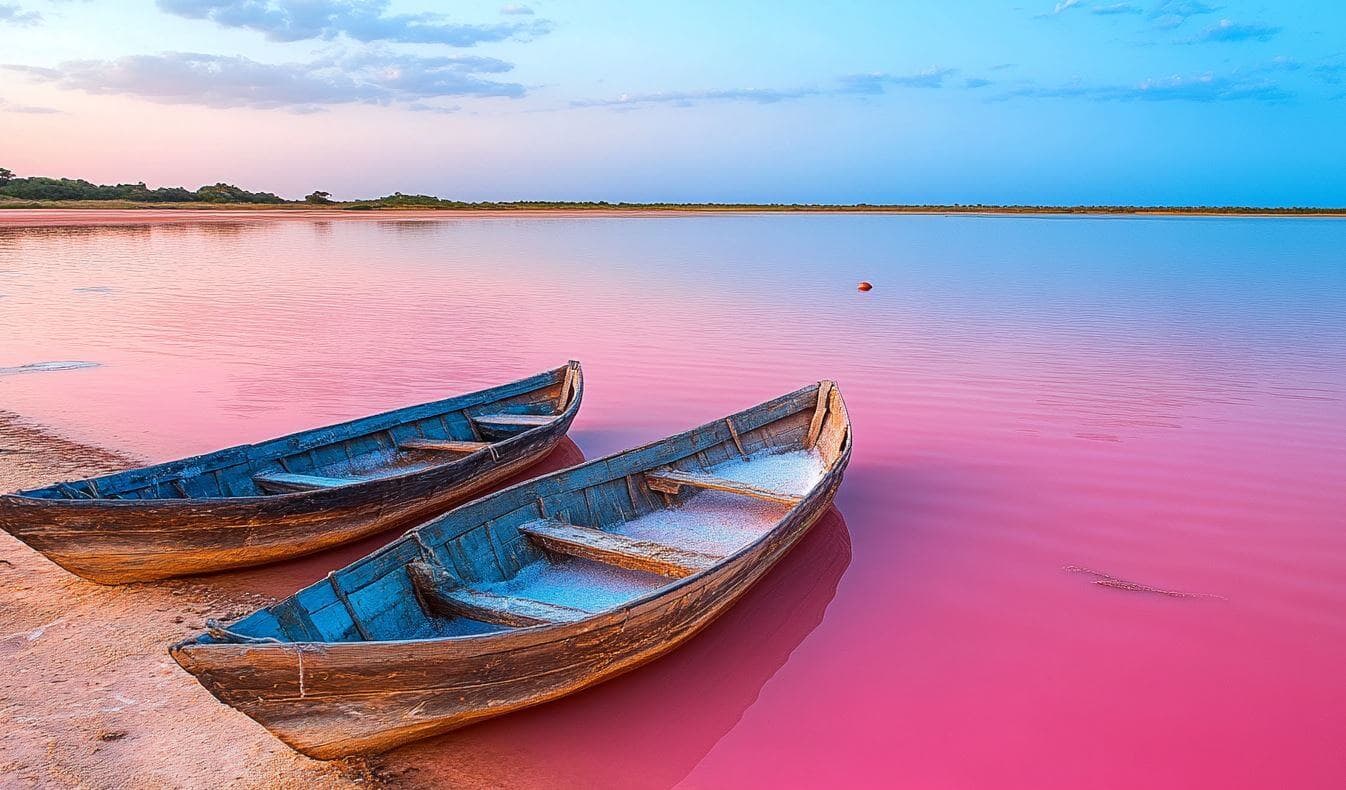
There are landscapes that seem to be taken from a dream, and the Pink Lake of Senegal —officially known as Lac Retba— is, without a doubt, one of them. Its waters of an intense pink color, which contrast with the white of the salt and the blue of the African sky, generate an inevitable question in every traveler who contemplates it for the first time: why is the Pink Lake pink? The answer, far from being magic, is pure fascinating science. And understanding it makes the experience of visiting it even more special.
The invisible protagonist: the microalga Dunaliella salina
The responsible for that spectacular pink color is a microorganism called Dunaliella salina, an extremophilic microalga capable of surviving in conditions of extreme salinity that would be lethal for most living beings. The Pink Lake has a salt concentration that can exceed that of the Dead Sea at certain times of the year, making its waters an almost inhospitable environment.
To adapt and protect itself from the intense solar radiation in that salty medium, Dunaliella salina produces large quantities of betacarotene, the same pigment that gives carrots their orange color. In the lake, the massive accumulation of this pigment in millions of microalgae dyes the water with shades that range from pale pink to intense red, passing through fuchsia and lilac. The visual result is absolutely hypnotic.
Why does this alga only live here?
Dunaliella salina thrives precisely because the environment is extreme. The very high salinity eliminates almost all its competitors and natural predators, allowing it to reproduce without restraint. The higher the salt concentration and the more intense the sunlight, the more betacarotene it produces and, therefore, the more intense the color of the lake. It is a direct and fascinating relationship between chemistry, biology, and geography.
Is the Pink Lake always pink? The variability of the color
One of the most frequent questions is if the Pink Lake is always pink. The short answer is: not always with the same intensity. The color varies depending on several environmental factors that interact with each other.
The time of year matters a lot
The most intense and spectacular color is observed during the dry season, which in Senegal goes from approximately November to June. During these months, evaporation is maximum, the salinity of the water reaches its highest levels, and solar radiation is very intense. All these conditions favor the proliferation of Dunaliella salina and the production of betacarotene.
On the contrary, during the raining season (from July to October), the rains dilute the lake's water, reduce its salinity, and decrease the concentration of the microalga. The result is a more subdued pink color, sometimes almost imperceptible. The lake can look brown or grayish at times of greatest dilution.
The time of day also influences
Even within the same day, the color of the lake can vary significantly. The sunlight interacts differently with the water depending on the angle of incidence. At dawn and dusk, the pink and orange tones intensify spectacularly, creating dreamlike photographs. At noon, with the sun high, the color can seem more pale or whitish due to the direct reflection.
Depth and aerial view
The Pink Lake is relatively shallow, which concentrates the salinity even more and favors the visibility of the color. From the ground, the visual experience is already impressive, but those who have the opportunity to see it from the air —in flight or from a high dune— truly understand the magnitude of that pink mantle spread over the land. If you visit the area, ask your guide for the best elevated observation points, as it can make a difference.
The role of salt: a lake that is also a mine
The Pink Lake is not only a visual spectacle; it is also a fundamental economic resource for local communities. For centuries, salt collectors —locally called collecteurs de sel— have worked in its waters extracting salt by hand. To protect their skin from the extremely high salt concentration, they grease themselves with shea butter, which allows them to stay in the water for hours without suffering burns.
This traditional activity is part of the lake's landscape as much as its color. Seeing the workers with their canoes loaded with white salt on the pink water is one of the most iconic images of Senegal. If you visit the Pink Lake with NeoGeo DMC, our specialized guides will explain this process in detail and connect you with the cultural and economic reality of the place, beyond just taking a photograph.
Is it dangerous to bathe in the Pink Lake?
Many travelers wonder if they can get into the water. The answer is yes, although with precautions. The high salinity makes the body float effortlessly, similar to the Dead Sea. However, prolonged contact can irritate the skin, especially if there are small wounds or cuts. Local guides and responsible tourist operators always inform about how to enjoy the bath safely and respectfully with the environment.
It is also important to remember that the lake is a fragile ecosystem. Unmanaged mass tourism can negatively affect the concentration of microalgae and, therefore, the very color that everyone wants to see. Traveling with a responsible tourist operator like NeoGeo DMC ensures that your visit is carried out under sustainability criteria and respect for the natural environment and local communities.
How to get to the Pink Lake and when to visit it
The Pink Lake is located about 35 kilometers northeast of Dakar, the capital of Senegal. It is perfectly accessible by vehicle from the city, making it a very popular day excursion. However, combining it with a visit to the island of Gorée, the Dakar market, or the sand dunes surrounding the lake can turn the experience into something truly memorable.
The best time to visit the lake and see its most intense color is between November and May, when the dry season is in full swing. If your trip to Senegal falls within these months, do not hesitate to include the Pink Lake in your itinerary. At NeoGeo DMC, we design personalized and sustainable excursions and tours that include the Pink Lake as a star point, adapted to your times and preferences.
A phenomenon that shares the world
The Pink Lake of Senegal is perhaps the most famous in the world, but it is not the only one. There are other pink-colored lakes in Australia (like Lake Hillier), in Spain (the salt pans of Torrevieja), or in Bolivia. In all of them, the mechanism is similar: halophilic microorganisms —salt lovers— that produce pigments as a response to extreme conditions. However, the unique combination of salinity, climate, light, and cultural environment makes the Senegalese Lac Retba a truly unique place.
Frequently asked questions about the Pink Lake of Senegal
Why is the Pink Lake pink?
The pink color of the Pink Lake is due to the massive presence of the microalga Dunaliella salina, which produces betacarotene as a defense mechanism against extreme salinity and intense solar radiation. The accumulation of this pigment in millions of microalgae dyes the water pink.
Is the Pink Lake always pink?
Not always with the same intensity. The color is more vivid during the dry season (November-June), when salinity is maximum. During the rainy season, the rains dilute the water and the color becomes much less intense, sometimes becoming brown or grayish.
What is the best time to visit the Pink Lake?
The best time is between November and May, during the Senegalese dry season. During these months, the color is more intense and the climatic conditions are more pleasant for the traveler.
Can you swim in the Pink Lake?
Yes, it is possible to bathe in the lake. The high salinity allows you to float effortlessly, similar to the Dead Sea. However, it is recommended not to have open wounds and to limit exposure time to avoid skin irritations.
How can I visit the Pink Lake with NeoGeo DMC?
NeoGeo DMC offers complete excursions and tours to the Pink Lake from Dakar, including specialized guides, transportation, and cultural context. Contact our team to design a personalized and sustainable experience.