Maison des Esclaves de Gorée: the place where history demands silence
There are places in the world that are not visited, but experienced. The Maison des Esclaves de Gorée is one of them. Located on the small island of Gorée, off the coast of Dakar, this eighteenth-century house is today one of the most visited and most emotionally charged monuments on the entire African continent. It is not simply a historical building: it is a universal symbol of the memory of slavery, a space where the past refuses to remain silent.
Every year, thousands of travelers, academics, political leaders and descendants of enslaved people cross the Atlantic or travel across the African continent to reach this door. A small, almost humble door that opens directly onto the ocean and which historians call the Door of No Return. Understanding what the Maison des Esclaves is, why it matters and how to visit it with the respect it deserves is the purpose of this guide.
The island of Gorée: a setting charged with history
Before discussing the house itself, it is necessary to understand the geographical and historical context in which it is situated. The island of Gorée is a small territory of barely 0.18 km² located about 3 kilometers off the coast of Dakar. Despite its size, its strategic position in the Atlantic made it for centuries a point of dispute between European colonial powers: the Portuguese, Dutch, English and French successively ceded and seized it from the fifteenth to the nineteenth century.
It was precisely this condition as a colonial enclave that determined its role in the transatlantic trade of enslaved people. The island functioned as a transit point and storage facility for men, women and children captured in the interior of the African continent before being shipped to the Americas. Today, Gorée has been a UNESCO World Heritage Site since 1978, a recognition that underscores both its historical value and its function as a place of memory and reconciliation.
Walking through its cobblestone streets, among pastel-colored houses and bougainvillea, produces a contradictory sensation: the beauty of the place contrasts with the weight of what happened there. That tension is an essential part of the experience. Gorée does not allow the traveler to remain on the surface.
The Maison des Esclaves: history of the building
The Maison des Esclaves was built around 1776 by the Van Alstein family, of Dutch origin. Like many other buildings on the island, it responded to a dual architecture characteristic of the colonial era: the upper floor was reserved for the owner's residence, while the lower floor housed the cells where enslaved people were held before deportation.
The building has a structure that today is disturbing precisely because of its functionality. The cells on the lower floor were small, dark and damp, designed to house dozens of people in inhumane conditions. Men, women and children were separated and classified according to criteria that responded only to the needs of the slave market. Those who became ill or resisted were confined to even smaller spaces.
At the back of the central courtyard opens that door which has traveled the world in photographs: the so-called Porte du Voyage sans Retour, the Door of No Return. From there, the enslaved were boarded directly onto ships that would take them to plantations in the Caribbean, North America or South America. For most, it was the last time they set foot on African soil.
The role of Boubacar Joseph Ndiaye: guardian of memory
It would be impossible to speak of the Maison des Esclaves without mentioning Boubacar Joseph Ndiaye, the man who dedicated his life to preserving and disseminating the history of this place. For decades, Ndiaye was the curator and guide of the museum, and became an internationally recognized figure for his ability to narrate the horror of slavery with a mixture of historical rigor and profound humanity.
He received in this building heads of state, Nobel Prize winners, artists and anonymous travelers, and offered them all the same account: honest, painful and necessary. His death in 2009 was mourned around the world, but his legacy remains alive in every guided tour conducted at the museum. Current guides continue his tradition of telling this story without euphemisms, without comfortable distance, facing the past head-on.
The historical debate: symbol vs. figures
The Maison des Esclaves has been the subject of relevant academic debate that the informed traveler should know about. Some historians, such as Senegalese scholar Ibrahima Thioub, have questioned the numerical scope of the slave trade that passed specifically through Gorée, arguing that the actual figures were smaller than popular narrative suggests and that other ports on the continent played a quantitatively more significant role in the transatlantic trade.
This debate, however, does not diminish one iota the symbolic importance of the place. The Maison des Esclaves is not a monument to a statistic: it is a monument to an indisputable historical reality, that of transatlantic slavery as one of the most devastating crimes in human history. And Gorée, regardless of the exact numbers, was part of that system. Its value as a space of memory, mourning and education transcends any quantitative debate.
Understanding this distinction enriches the visit. It is not a matter of going to Gorée to seek exact figures, but to understand a system, to come into contact with a history that continues to have consequences in the present world, and to pay homage to those who suffered it.
How to visit the Maison des Esclaves de Gorée
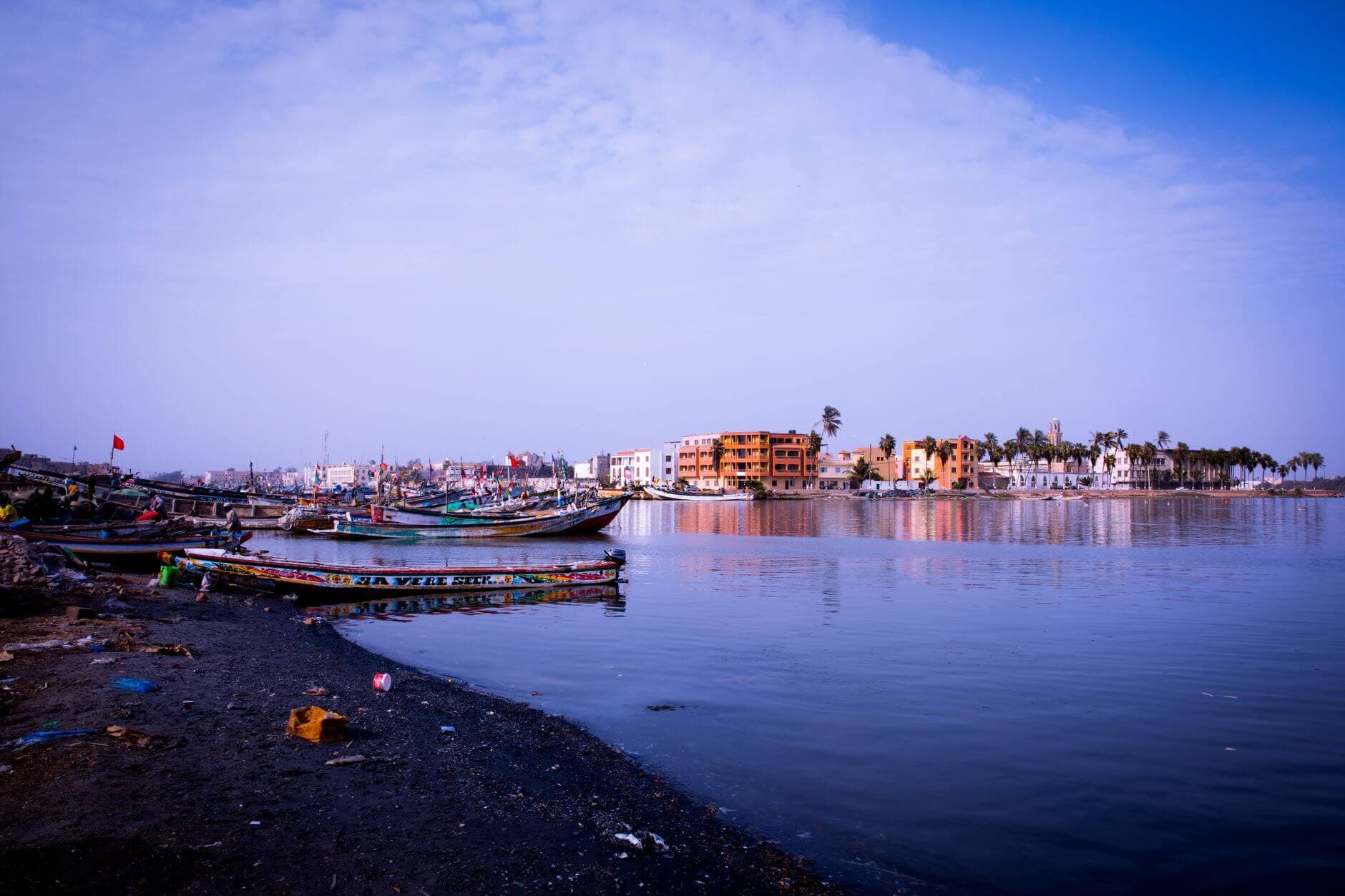
Getting to Gorée is part of the experience. The ferry departing from the port of Dakar takes approximately twenty minutes to cross the bay, and that journey over water already prepares the traveler for what they will find. The crossing, simple and economical, is the first step of a journey that is not easily forgotten.
Once on the island, the Maison des Esclaves is just a few minutes' walk from the dock. The museum opens its doors throughout the week, although it is recommended to verify opening hours in advance, especially on holidays or during high season. Admission to the museum is symbolic in cost, and it is strongly recommended to hire the services of a local guide, as the guided tour completely transforms understanding of the space.
If you travel with NeoGeo DMC, our excursions to Gorée include ferry transportation, museum admission and a guided tour with a local expert who contextualizes the history of the island beyond the walls of the Maison des Esclaves. We combine the museum visit with a tour of the rest of the island, including the Historical Museum of Africa and viewpoints that offer privileged views of the Atlantic. It is a full day that we recommend to all travelers arriving in Dakar, regardless of the length of their stay.
Tips for a respectful visit
The Maison des Esclaves is not a theme park or a typical tourist attraction. It is a place of memory, and as such demands behavior accordingly. Silence, active listening during the guide's explanations and a willingness to be emotionally moved are attitudes that enrich the visit both for oneself and for those sharing the space.
Photography is permitted in most of the premises, but it should be done discreetly and without making it the main objective of the visit. Many of the visitors who come to Gorée do so on a personal or family journey of memory, and it is worth keeping that in mind. Additionally, it is recommended to arrive early in the morning to avoid the largest concentration of groups and to experience the visit with more calm and solemnity.
Finally, spending time on the rest of the island is a way to complete the historical narrative. Gorée is not just the Maison des Esclaves: it is also a living village, with artists, fishermen and a community that has chosen to inhabit that memory and transform it into culture and resistance.
Frequently asked questions about the Maison des Esclaves de Gorée
How do I get to the island of Gorée from Dakar?
Access to Gorée is by ferry from the port of Dakar. The crossing takes approximately twenty minutes and boats depart with relative frequency throughout the day. It is recommended to arrive early at the dock, especially on weekends and during high season, as demand can be high.
Is it necessary to hire a guide to visit the Maison des Esclaves?
It is not mandatory, but highly recommended. Local guides, trained in the tradition initiated by Boubacar Joseph Ndiaye, offer a narrative that goes far beyond what informational panels can convey. The guided tour transforms the tour into an educational and emotionally meaningful experience that is difficult to achieve independently.
How much time is needed to visit Gorée?
A complete visit to the island, including the Maison des Esclaves, the Historical Museum of Africa and a leisurely walk through the village streets, can take between three and five hours. If you wish to eat on the island and explore more leisurely, it can easily extend to a full day.
Is it a suitable place to visit with children?
Yes, as long as the explanation is adapted to the age and maturity of the minors. The history of slavery is part of the curriculum in many countries, and Gorée offers a way to approach it in a tangible and memorable way. Guides have experience adapting the narrative to different types of audiences, including school groups and families.
What is the relationship between the Maison des Esclaves and UNESCO heritage?
The island of Gorée as a whole was declared a UNESCO World Heritage Site in 1978, recognizing its historical value as testimony to the transatlantic slave trade and its importance as a place of memory and reconciliation. The Maison des Esclaves is the most emblematic building on the island and the one that best concentrates that symbolic meaning on a global scale.