
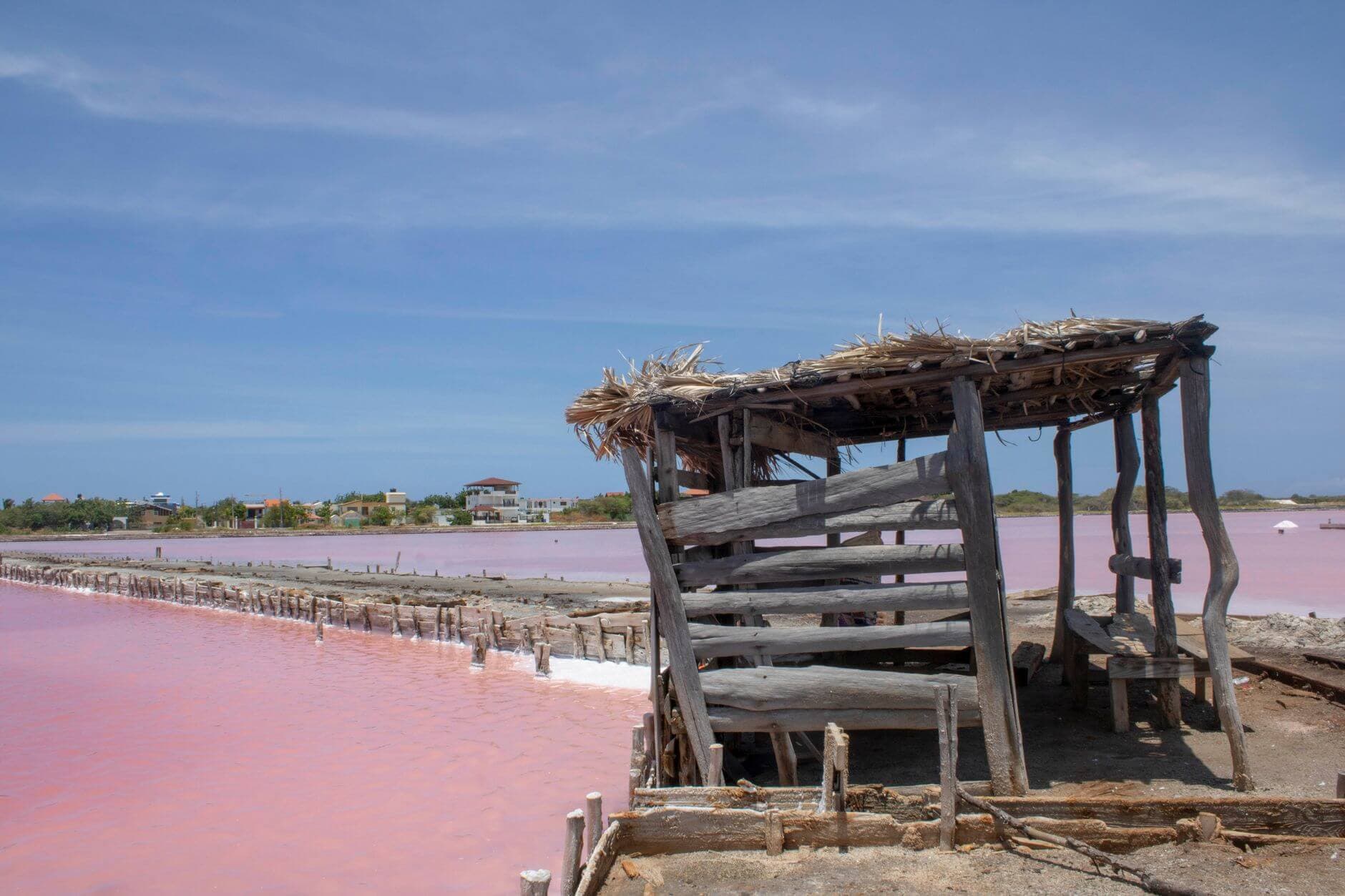
Lake Retba: Why is it pink? The science behind its unique color
The main cause: the microalgae Dunaliella salina
The invisible protagonist of this natural phenomenon is a microorganism called Dunaliella salina, an extremophilic microalga capable of surviving in conditions that would be lethal to almost any other form of life. This unicellular alga thrives in hypersaline environments —i.e., with extremely high salt concentrations— and is directly responsible for the lake's characteristic pink color.
How does it do it? Dunaliella salina produces large amounts of beta-carotene, the same pigment that gives carrots their orange color. This pigment acts as a defense mechanism: it protects the alga from intense solar radiation and the osmotic stress generated by the extremely high salt concentration. The more salt and sunlight the lake receives, the more beta-carotene these microalgae produce, and the more intense the pink coloration of the water becomes.
When is the color most intense?
The color of Lake Retba is not always the same. The intensity of the pink depends on several factors:
- The time of year: During the dry season (from November to June), evaporation increases the salt concentration and the proliferation of algae, intensifying the color.
- The time of day: The midday and afternoon sunlight tends to reveal the most vivid and saturated tones.
- Rainfall: During the wet season, rainwater dilutes the salt and can temporarily attenuate the pink color.
Extreme salinity: the second major factor
This extremely high concentration is explained by a combination of geographical and climatic factors:
- The lake is a coastal lagoon separated from the Atlantic Ocean by a narrow strip of dunes.
- The semi-arid climate of the region generates intense and constant evaporation.
- The low precipitation does not compensate for the water loss due to evaporation, gradually concentrating the salt.
This extreme salinity creates a hypersaline ecosystem where only specialized organisms such as Dunaliella salina and certain halophilic bacteria can survive. Precisely these bacteria also contribute to the lake's pink color by producing pigments similar to beta-carotene.
Halophilic bacteria: the invisible allies of color
Along with microalgae, halophilic bacteria (salt lovers) complete the scientific picture of Lake Retba. These extremophilic microorganisms also synthesize carotenoid pigments as an adaptive response to salinity and UV radiation. Their presence reinforces and nuances the pink and purple tones that the water can acquire under certain conditions of light and temperature.
The combination of microalgae and halophilic bacteria makes Lake Retba a unique microbial ecosystem, a perfect example of how life finds a way to adapt even in the most hostile environments on the planet.
The role of sunlight in the visual spectacle
Sunlight not only stimulates the production of beta-carotene but also plays a key role in the visual perception of the color. Sun rays interact with the pigments dissolved in the water and with the suspended particles, generating different shades depending on the angle of incidence. That's why Lake Retba can appear pale pink at dawn, intense fuchsia at noon, and golden purple at sunset. Each hour of the day offers a different palette, making it a particularly photogenic destination.
Salt extraction: a human activity that coexists with the phenomenon
Lake Retba is not just a natural phenomenon; it's also a space for life and work for local communities. For generations, salt extractors —locally known as «salt pullers»— have worked inside the lake, collecting salt from the bottom with shovels and baskets, in an activity that can last up to seven or eight hours a day.
To protect their skin from the corrosive action of salt, workers apply shea butter all over their bodies before entering the water. This ancestral practice is one of the most striking cultural elements that can be observed during a visit to the lake. Salt extraction is also an essential economic activity for the region, and the lake produces thousands of tons of salt per year.
If you visit Lake Retba with NeoGeo DMC, you'll be able to approach the salt extractors, learn about their way of life, and understand how humans have learned to coexist with this extraordinary ecosystem without destroying it.
Is it safe to bathe in Lake Retba?
One of the most frequent questions among travelers is whether it's possible to bathe in the Pink Lake. The answer is yes, although with some nuances. The extremely high salt concentration allows for easy floating, similar to what happens in the Dead Sea. However, it's essential to consider that salt can irritate open wounds or cuts on the skin, and prolonged contact can be uncomfortable. It's recommended to apply oil or shea butter before entering the water and to shower well after bathing.
How to get to Lake Retba from Dakar
Lake Retba is approximately 35 kilometers northeast of Dakar, in the Cape Verde Peninsula. Access is relatively simple and can be done by private vehicle, taxi, or through an organized excursion. The route crosses dune landscapes and small villages that are already part of the experience.
From NeoGeo DMC, we organize excursions to Lake Retba from Dakar, combining the visit to the lake with other points of interest in the Cape Verde Peninsula. Our local guides will explain in detail the science behind the pink color, the history of salt extraction, and the culture of the communities living near the lake. Check our available excursions and design your experience in Senegal with us.
A phenomenon recognized worldwide
Lake Retba is not the only pink lake in the world, but it's one of the most famous and accessible. Other lakes with similar colors exist in Australia (like Lake Hillier) or Spain (the salt pans of Torrevieja), and all share the same scientific principle: the presence of microorganisms producing carotenoid pigments in hypersaline environments. However, Lake Retba has something special: the possibility of experiencing it up close, talking to the workers who extract salt every day, and integrating it into a broader trip through the rich culture and nature of Senegal.
Frequently asked questions about Lake Retba
Why is Lake Retba pink?
The pink color of Lake Retba is mainly due to the presence of microalgae Dunaliella salina, which produce beta-carotene as a defense mechanism against high salinity and solar radiation. Halophilic bacteria also contribute to the phenomenon with their own carotenoid pigments.
Is the pink color of the lake permanent?
No, the intensity of the color varies depending on the time of year, the time of day, and the weather conditions. The pink is more intense during the dry season and during the hours of highest solar radiation. Rainfall can temporarily dilute the color.
Is it dangerous to bathe in Lake Retba?
Bathing in Lake Retba is safe for most people, although the high salt concentration can irritate open wounds. It's recommended to apply shea butter before entering the water and to shower well after. The buoyancy is very high, similar to that of the Dead Sea.
What is the best time to visit Lake Retba?
The dry season, between November and June, is the best time to visit the lake, as the pink color is more intense and the weather conditions are more pleasant for travelers.
Can Lake Retba be visited from Dakar in one day?
Yes, Lake Retba is about 35 kilometers from Dakar and can be visited in a full-day excursion. NeoGeo DMC organizes guided tours that include transportation, local guide, and complementary activities in the area.