Can you bathe in Senegal's Pink Lake? Everything you need to know before visiting
The Pink Lake of Senegal, officially known as Lac Retba, is one of the most photographed and unique destinations in all of West Africa. Its striking pink hue, which varies between pale pink and intense fuchsia depending on the time of year and sunlight, makes it a natural spectacle that seems out of this world. But one of the questions that most recurs among travelers planning to visit it is: can you bathe in Senegal's Pink Lake? In this practical guide, we'll tell you everything you need to know to enjoy this natural wonder to the fullest.
What is the Pink Lake and why does it have that color?
The Pink Lake is located about 35 kilometers northeast of Dakar, in the Cape Verde peninsula. Its characteristic color is due to the presence of a microalgae called Dunaliella salina, which produces a pink pigment in response to the high salt concentration in the lake. In fact, the salinity of Lac Retba is comparable to that of the Dead Sea, reaching over 40% in some areas, far above the salinity of the ocean.
This natural phenomenon makes the lake a unique and fragile ecosystem, and it is precisely this extreme salinity that defines the conditions under which you can — and cannot — interact with its waters.
Can you bathe in Senegal's Pink Lake?
The short answer is: yes, it is technically possible to get into the water of the Pink Lake, but with important nuances you should know before doing so.
The high salinity: friend or foe?
Just like in the Dead Sea, the water's density is so high that the body floats naturally and effortlessly. This can be a curious and fun experience. However, that same extreme salinity can cause irritation to the skin, eyes, and mucous membranes if exposure is prolonged or if you have any open cuts or wounds. That's why local workers who extract salt from the lake apply shea butter to their skin as protection before entering the water.
Conditions and recommendations for bathing
- Avoid submerging your head: the salty water at that concentration can be very irritating to the eyes and nose.
- Do not enter if you have wounds or cuts: salt stings intensely in any skin lesion.
- Apply oil or shea butter before entering, just like local salt workers do.
- Shower well with fresh water when you exit to remove salt residues from your skin and hair.
- Consult with your guide about the areas allowed for bathers, as some areas are reserved for salt extraction and are not suitable for tourism.
Is bathing allowed?
There is no general prohibition against bathing in the Pink Lake, but there are active work areas where salt collectors perform their daily tasks, and it is not appropriate or safe to enter. A local guide or a trusted tour operator will indicate exactly where you can do so without disturbing the workers or putting your safety at risk.
What activities can you do in the Pink Lake besides bathing?
Beyond the possibility of floating in its waters, the Pink Lake offers a variety of experiences that make it a complete and enriching visit.
Photography and landscape observation
The sunset over the Pink Lake is, without a doubt, one of the most impressive visual spectacles in Senegal. The pink tones of the water mix with the oranges and golds of the sky, creating an unforgettable color palette. If you're a photography enthusiast, bring your camera fully charged and make sure to visit at both early morning and sunset to capture the light at its best.
Visit to the salt collectors
One of the most authentic experiences at the Pink Lake is observing — and in some cases participating — in the work of the salt collectors. These men and women extract salt by hand from pirogues, piling it into white mounds on the shore. It's a centuries-old tradition that is part of the region's cultural heritage and offers a unique perspective on local life.
Pirogue rides
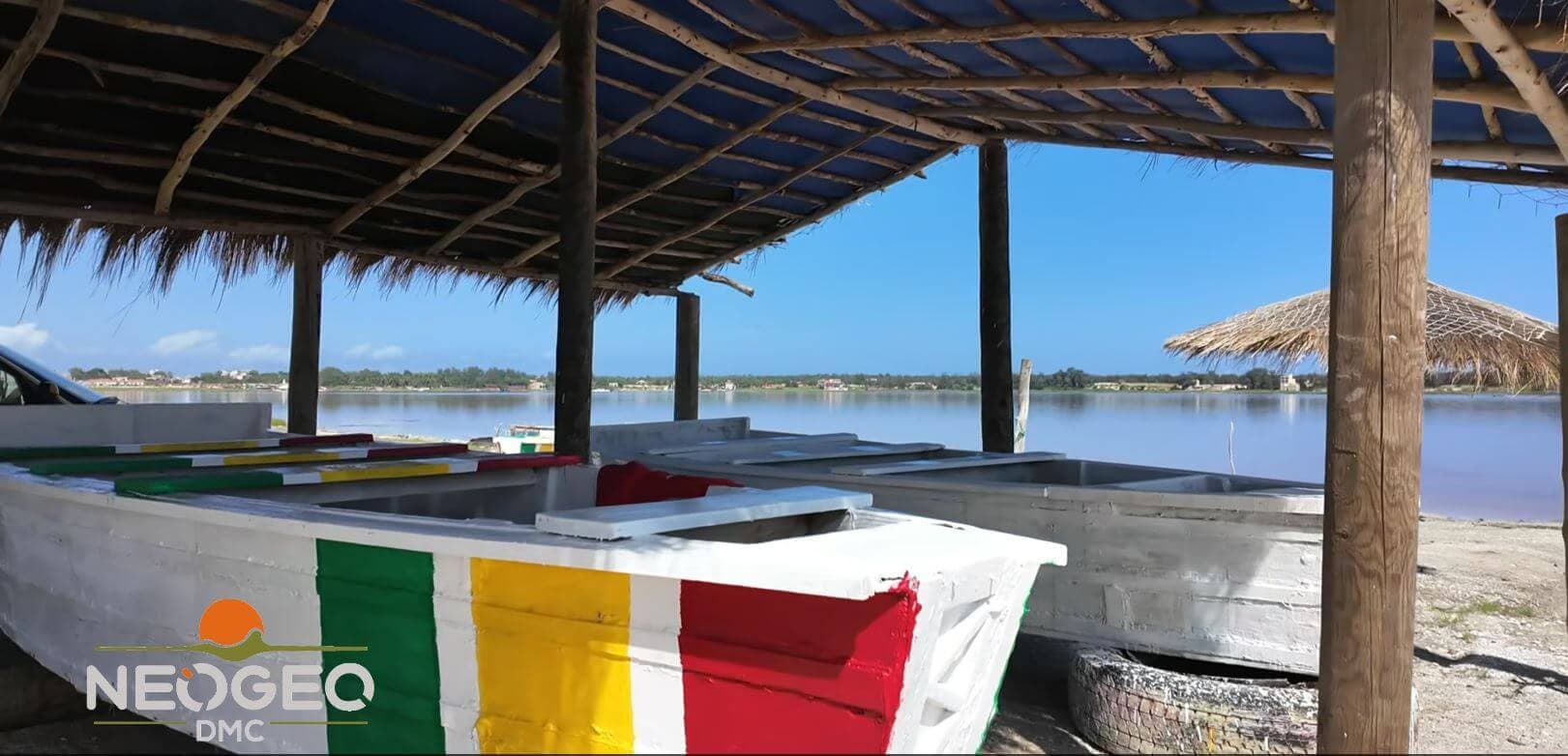
Navigating the Pink Lake in a traditional pirogue is another fantastic way to enjoy the surroundings. From the water, the perspective of the lake and its colors is completely different, and you can get close to the salt extraction areas to see the work up close without interfering with it.
Local gastronomy on the shore
Around the lake, you'll find small stalls and restaurants where you can taste the most authentic Senegalese cuisine: thiéboudienne (fish and rice), yassa chicken or grilled fish freshly caught. A gastronomic stop that's essential to complete the experience.
Is it worth visiting the Pink Lake?
Absolutely. The Pink Lake is one of those destinations that, once seen, are not easily forgotten. Its combination of unique natural phenomenon, living culture, and photogenic landscapes makes it a must-visit for any traveler visiting Senegal. Plus, its proximity to Dakar makes it perfectly accessible as a day trip or as part of a broader itinerary through the country.
That being said, it's a good idea to manage your expectations: the lake's color varies significantly depending on the season and weather conditions. During the dry season (from November to June), the pink is usually more intense, while in the rainy season, it may lose some of its characteristic tone. If you travel with the specific intention of seeing the lake at its best, the dry season is the most recommended.
How to get to the Pink Lake from Dakar?
From Dakar, the journey to the Pink Lake takes approximately between 45 minutes and an hour by car, depending on traffic. The most comfortable and safe option is to hire an organized excursion with a local operator that includes transportation, guide, and the most interesting stops along the way. At NeoGeo DMC, we offer excursions to the Pink Lake that combine the visit to the lake with other points of interest in the Cape Verde peninsula, so you can make the most of your time in Senegal.
Practical tips for your visit to the Pink Lake
- Wear clothes that you don't mind getting stained: salt and pink mud can leave difficult-to-remove marks.
- High sun protection: the sun's reflection on the water and salt is intense.
- Water and snacks: although there are local stalls, it's a good idea to bring your own bottled water.
- Sturdy footwear: the shore can be irregular and slippery in some areas.
- Respect for workers: remember that the lake is also a workplace and livelihood for many local families. Always ask for permission before photographing people.
Frequently asked questions about Senegal's Pink Lake
Why does the Pink Lake have that special color?
The Pink Lake's pink color (Lac Retba) is due to the combination of a high salt concentration and the presence of the microalgae Dunaliella salina, which produces a pink pigment as an adaptation mechanism. The color's intensity varies depending on the time of year, being more vivid during the dry season.
Can you bathe in Senegal's Pink Lake without risk?
Yes, it is possible to bathe in the Pink Lake, but with precautions. The extremely high salinity can irritate the skin, eyes, and mucous membranes, especially if you have wounds. It is recommended to apply shea butter before entering, not to submerge your head, and to shower well with fresh water when you exit.
What is the best time to visit the Pink Lake?
The best time to visit the Pink Lake and see its most intense color is during the dry season, between November and June. During these months, evaporation is greater, salt concentration increases, and the pink becomes more vibrant and photogenic.
Is it worth visiting the Pink Lake if you only have one day in Dakar?
Yes, absolutely. The Pink Lake is less than an hour from Dakar and can be visited perfectly in a half-day or full-day excursion. It's one of the most unique attractions in Senegal and an experience you'll hardly find anywhere else in the world.
Are there local guides at the Pink Lake?
Yes, around the lake, you'll find local guides who offer their services independently. However, for a more organized, safe, and enriching experience, it's most recommended to hire an excursion with a trusted tour operator like NeoGeo DMC, which includes transportation, specialized guide, and all necessary logistics.