Bandia Reserve in Senegal: complete guide to experiencing an authentic safari
Just over 65 kilometers south of Dakar, between the road leading to Mbour and the semi-arid plains of western Senegal, lies one of the best-kept secrets of nature tourism in West Africa: the Bandia Reserve. Created in 1990 over an area of approximately 1,500 hectares, this private reserve has achieved what very few natural spaces on the continent manage: offering a genuine, accessible, and thrilling safari experience just hours from the capital. If you're planning a trip to Senegal, Bandia deserves a priority place in your itinerary.
The reserve was conceived from its inception as a conservation and sustainable tourism project. Its promoters reintroduced species that had disappeared from the region decades ago, and today the result is a rich and diverse ecosystem that surprises even the most experienced travelers. Far from the noise of the city and the beaches of the Petite Côte, Bandia offers a wild escape that completely transforms your perception of the country.
What animals can you see in Bandia Reserve
The big question any traveler asks before visiting Bandia is, inevitably, what they will find inside. The answer is more generous than many expect. The reserve is home to southern white rhinoceroses, one of its most celebrated attractions and difficult to see elsewhere in West Africa. Seeing them just meters away from your vehicle, grazing with apparent indifference, is an experience that stays with you.
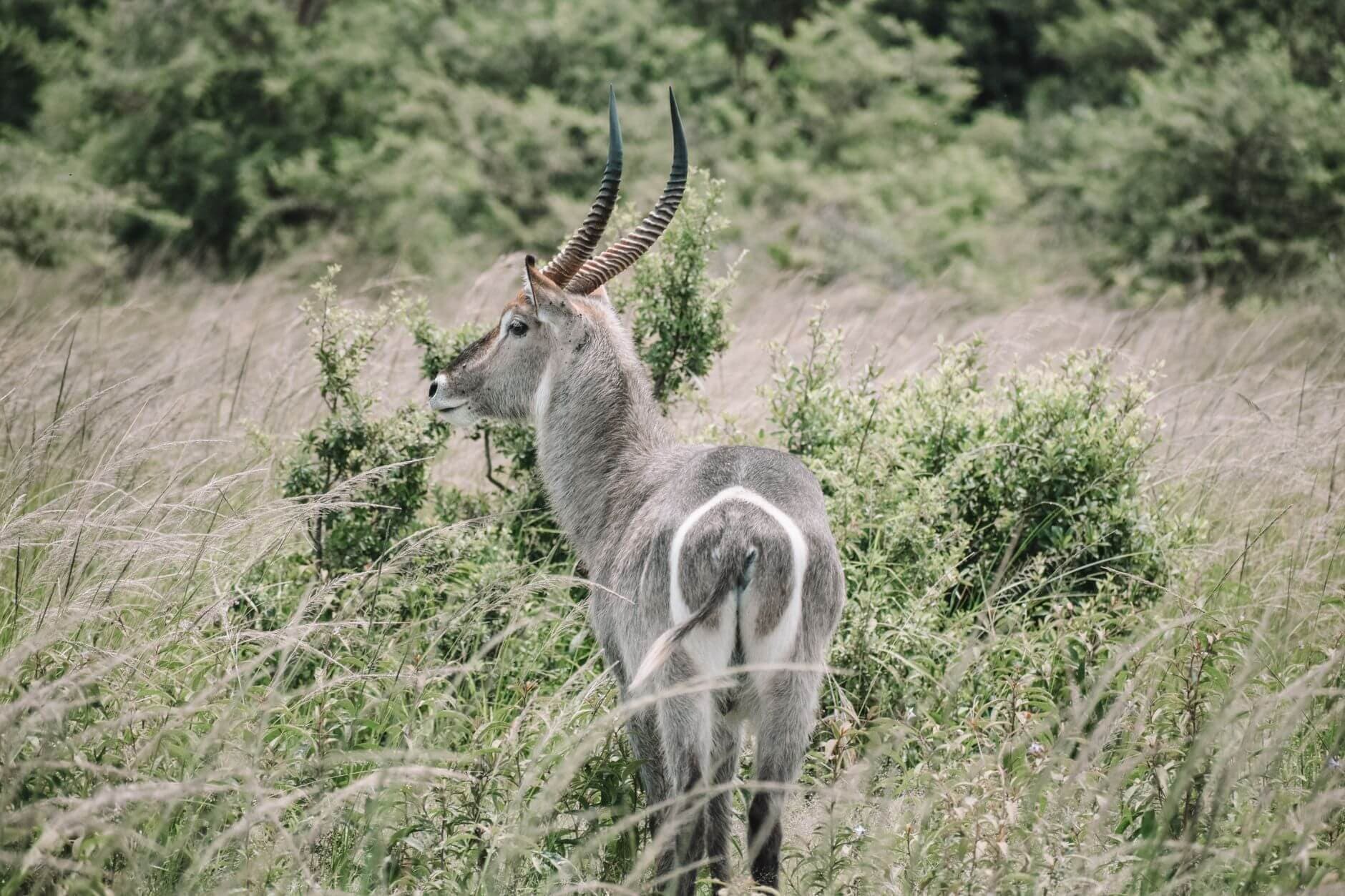
In addition to rhinoceroses, Bandia boasts an impressive variety of mammals. African buffalo herds move through acacia vegetation, while giraffes—successfully reintroduced—stand out against the horizon with an elegance that never ceases to impress. You'll also commonly find zebras, wildebeest, hippopotamuses in interior ponds, Nile crocodiles, warthogs, and a wide collection of antelope species, such as oryx, Buffon's kob, and sitatunga.
For bird lovers, the reserve is equally generous. More than 120 species have been recorded within its boundaries, from large raptors to colorful bee-eaters and hornbills. So if you travel with binoculars, Bandia can become an essential stop on any birdwatching route through Senegal. The combination of dry savanna, wetlands, and gallery forest creates microhabitats that attract extraordinarily diverse birdlife.
How to get to Bandia Reserve
Bandia's location is one of its great logistical attractions. Located on the national road connecting Dakar with Mbour and Saly, the reserve is easily accessible whether you're staying in the capital or enjoying a few days at the beach on the Petite Côte. From Dakar, the drive or taxi journey takes around 90 minutes depending on traffic, a very reasonable distance for what it offers in return.
The most comfortable and recommended way to get there is through an organized excursion from Dakar or Saly. A local operator with experience in the area will provide round-trip transportation, a guide inside the reserve, and in many cases, entry included, which greatly simplifies the day's logistics. If you prefer to go on your own, you can take a sept-place—Senegal's characteristic shared transport—to Mbour and from there find a taxi to take you to the entrance. However, keep in mind that inside the reserve the tour is done by vehicle, so you'll need to hire one at the entrance if you don't have your own.
From NeoGeo DMC we organize excursions to Bandia Reserve combined with visits to other points of interest on the Petite Côte, which allows you to make the most of each day. If you'd like us to advise you on the best way to include Bandia in your itinerary, don't hesitate to contact us.
When is the best time to visit Bandia
Senegal has a climate marked by two clearly differentiated seasons: the dry season, which runs from November to May, and the rainy season, which spans June to October. To visit Bandia Reserve, the dry season is undoubtedly the most recommended. During these months the vegetation is sparser, which greatly facilitates wildlife spotting, and the interior roads of the reserve remain in perfect condition for driving.
Within the dry season, December to February are especially pleasant in terms of temperature, with warm but not sweltering days and cool nights. As spring advances, the heat intensifies, although wildlife visibility remains excellent because animals concentrate around water points. If you travel during the rainy season, it's not impossible to visit Bandia—in fact, the vegetation becomes lush and the landscape changes dramatically—but you should be prepared for the possibility that some roads may be closed and that wildlife spotting will be more difficult.
The early morning hours and late afternoon are always the best times of day to observe wildlife, as animals take advantage of cooler temperatures to move and feed. If you can organize your visit to arrive at the reserve just when it opens, you'll have a considerable advantage over groups arriving mid-morning.
Prices and practical aspects of the visit
Entry to Bandia Reserve has a cost that varies depending on the season and the visitor's nationality, although in general terms it's very reasonable compared to other safari destinations on the continent. The price includes access and a vehicle tour of the established circuits, which can be completed in about two to three hours depending on the pace and the group's interest. Since prices can be updated, we recommend checking current rates directly with the reserve or through your tour operator before your visit.
Inside the reserve there is a restaurant where it's possible to have lunch after the safari, which makes the excursion a well-structured full day. The infrastructure is designed to welcome families with children as well as individual travelers or organized groups, and the reserve's staff speak French and, in many cases, English. Bringing sunscreen, a hat, and water is essential, especially if you visit during the hottest months.
A practical recommendation: always bring your camera or phone with a fully charged battery. Photo opportunities in Bandia are constant and, more than once, animals get so close to the vehicle that the images turn out to be truly spectacular. Telephoto lenses are welcome, but not essential.
Why Bandia fits perfectly into a Senegal itinerary
One of the great challenges when planning a trip to Senegal is finding the balance between the vibrant urban life of Dakar, relaxation on the beaches of the Petite Côte, and the cultural depth of destinations like the Saloum Delta or Casamance. Bandia Reserve solves this dilemma elegantly: it's close enough to the coast to include in a beach getaway, and impactful enough to justify a specific detour.
Many travelers combine Bandia with a visit to Lake Retba—Senegal's famous Pink Lake—on the same day, as both destinations are relatively close to Dakar and complement each other thematically. Others prefer to include it as the first day of a longer itinerary that continues south, toward Mbour, Joal-Fadiouth, or the Saloum Delta. In any case, Bandia adds a natural and adventure dimension that enriches any trip to the country.
If you're looking for a safari experience without needing to travel to more distant countries or invest weeks in the journey, Bandia Reserve demonstrates that Senegal has much more to offer than its usual tourist image suggests. A day in Bandia can completely change your vision of West Africa.
Frequently asked questions about Bandia Reserve
Is it safe to visit Bandia Reserve?
Yes, the reserve is a privately managed space with high safety standards. Tours are always conducted by vehicle and with specialized guides who understand animal behavior. There is no risk to visitors if you follow the reserve staff's instructions, which include not leaving the vehicle in certain areas and maintaining a low noise level to avoid disturbing the animals.
Can you visit Bandia with children?
Absolutely. Bandia Reserve is one of the most recommended excursions for families traveling to Senegal with children. The proximity of the animals, the excitement of the vehicle safari, and the variety of species make the experience fascinating for all ages. It's advisable to bring water, snacks, and sun protection for the little ones, and to choose the cooler hours for your visit.
How much time do you need to visit the reserve?
The standard tour of the reserve's circuits takes between two and three hours, although the total time for the excursion, including transportation from Dakar or Saly and a lunch stop, can extend to a full day of six to eight hours. If you have a special interest in photography or birdwatching, it's recommended to allow a bit more time so you can stop leisurely at the most interesting points.
Do you need to book in advance?
During high season—especially in December, January, and during Easter week holidays—it's recommended to book in advance, especially if you're traveling in a group. If you book the excursion through an operator like NeoGeo DMC, they'll handle all the arrangements. If you prefer to go on your own, the reserve usually admits visitors without an appointment, although it's good to confirm availability before making the trip.
What sets Bandia apart from other safaris in Africa?
The main difference is accessibility and scale. Bandia doesn't aim to compete with the major national parks in Tanzania or Kenya in terms of size or wildlife density, but it offers something those destinations cannot: the possibility of experiencing an authentic and thrilling safari in just a few hours, integrated into a broader Senegal itinerary. It's a safari on a human scale, without long transfers or complex logistics, ideal for travelers who want to combine nature with culture and beach in a single trip.